Together against domestic violence
Bundesarbeitsgemeinschaft Täterarbeit Häusliche Gewalt e.V.
The Federal Association for Perpetrator Work in Domestic Violence (BAG TäHG e.V.) is the profeminist umbrella organisation for perpetrator work facilities in Germany. We are active in cooperative alliances against domestic violence, professionalise work with people who use violence, and advocate for the implementation of the Istanbul Convention.
The services offered by our members are aimed at people who use violence. The goal is to prevent further acts of violence in order to protect victims and to combat domestic violence and stalking through prevention.
News & Events
There are currently no posts to display.
Events & Dates
30 September 2026:
Member exchange: “Digital Counselling”
12 November 2026:
Symposium: “Perpetrator Work – between diversification and quality assurance”
Counselling centres near you
Find perpetrator work facilities across Germany using our counselling centre search.
Positions
Equality-oriented perpetrator work as violence prevention
Mehr erfahren
We are convinced that a sustainable fight against domestic violence can only succeed if people who use violence are included in intervention approaches. When people who use violence learn to take responsibility for their behaviour and apply non-violent conflict resolution strategies, domestic violence can be ended and further violence prevented. Furthermore, children are enabled to grow up in non-violent family systems, and the passing on of violent behaviour to affected children is prevented. The Istanbul Convention also highlights the relevance of perpetrator work and calls for the expansion of perpetrator work in Germany.
Violence prevention through cooperation
Mehr erfahren
Domestic violence is a multi-layered and complex phenomenon. As an elementary part of the intervention chain in domestic violence, we are convinced that domestic violence can only be effectively combated and violent structures broken down and transformed through collective effort and inter-institutional cooperation. Therefore, we promote cooperation and networking with organisations from various sectors and are active in various alliances.
Domestic violence as a societal problem
Mehr erfahren
Domestic violence is a problem for society as a whole, underpinned by intersectional structures of discrimination. We believe that violence prevention is only possible in the long term through the transformation and dissolution of these structures. Therefore, it is our aim to anchor discrimination-critical perspectives in perpetrator work and align our work accordingly. We advocate for a society without racism, sexism, homo- and transphobia, ableism, and other forms of discrimination, and distance ourselves from anti-feminist positions.
Why our work is so important
“We only get closer to the vision of a world without gender-based violence against women through prevention, victim protection, good laws, consistent legal implementation, and perpetrator work. Specifically, perpetrator work that follows a gender-sensitive approach, possesses high professional expertise, maintains close cooperation with the women's support system, and is innovative—meaning it reacts to new developments and finds convincing professional and practical answers. For me and for us, that is what the BAG TäHG stands for.”

Dr Birgit Schweikert
Head of Sub-department 30 in the Equality Department at the Federal Ministry for Family Affairs, Senior Citizens, Women and Youth
“European and global cooperation is essential to enhance our approach to perpetrator intervention. Establishing European Standards and accreditation is crucial to ensure the safety of women and children. BAG TäHG's pioneering work in setting National Standards has been invaluable in supporting our endeavours. They are an invaluable ally in shaping best practices.”
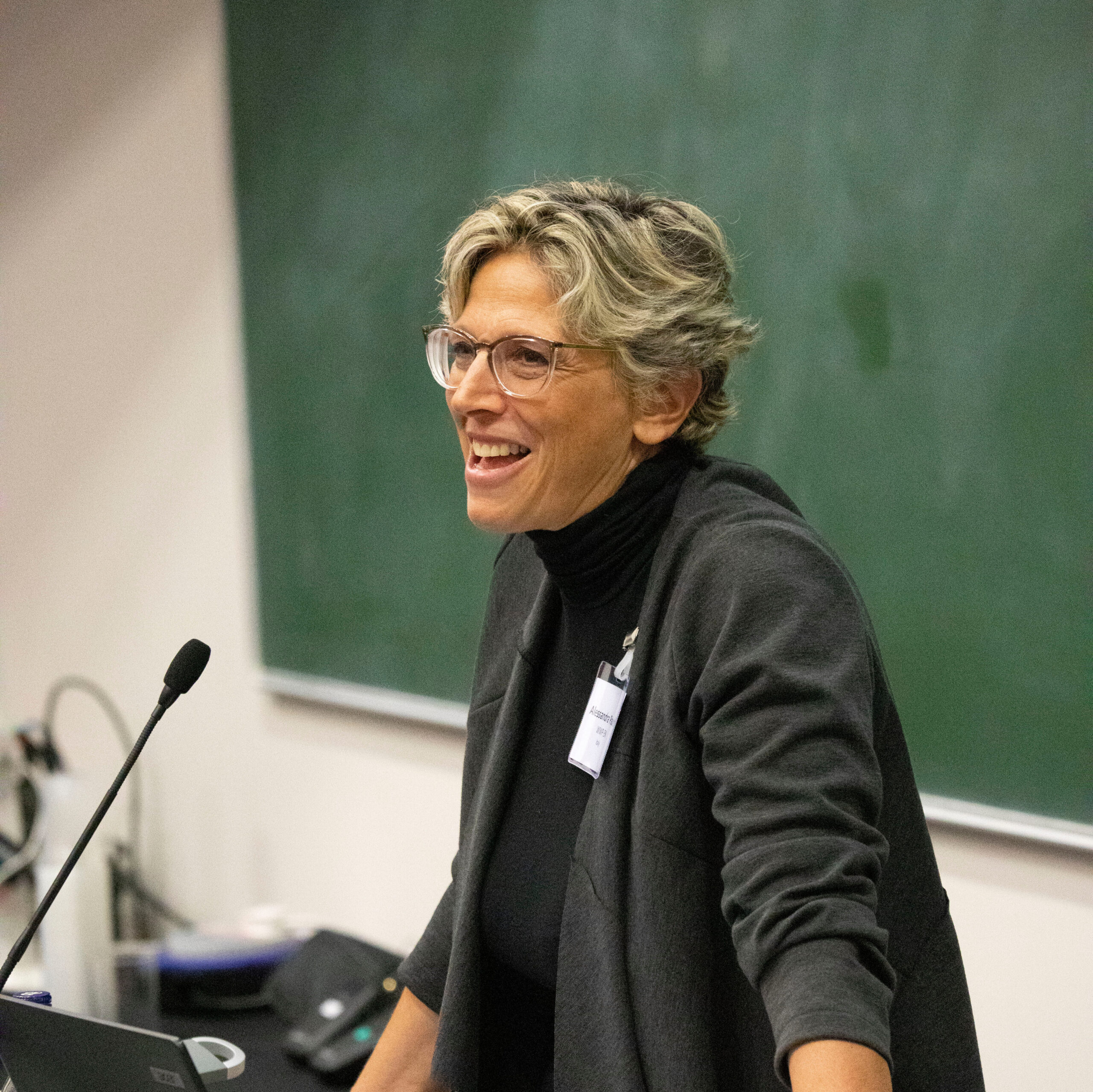
Alessandra Pauncz
Executive Director, Work With Perpetrators EN
“Perpetrator work that keeps the safety of women and children affected by violence in mind in all measures and holds perpetrators accountable for their actions is an enormously important contribution to supporting those affected. Not least, it is indispensable for the long-term prevention of violence. Trustful cooperation with the BAG TäHG has therefore been a central building block for us for many years in implementing the Istanbul Convention and for comprehensive protection against violence that goes beyond acute crisis intervention.”

Stefanie Leich
Chair of the Board Frauenhauskoordinierung e.V.

Facts & Figures
the Federal Association for Perpetrator Work in Domestic Violence (BAG TäHG e.V.) was founded.
received counselling from 46 of our member organisations in 2024.
with 116 counselling locations are members of the Federal Association for Perpetrator Work in Domestic Violence (BAG TäHG e.V.).
received further training from our training institute in 2024.
Frequently asked questions about perpetrator work in domestic violence
The Istanbul Convention defines domestic violence as “all acts of physical, sexual, psychological or economic violence that occur within the family or domestic unit or between former or current spouses or partners, whether or not the perpetrator shares or has shared the same residence with the victim.” (Art. 3b Istanbul Convention)
Perpetrator work refers to working with people who use violence in the field of domestic violence with the core aim of ending violence and preventing further acts of violence.
Perpetrator work plays an indispensable role in combating and preventing domestic violence. In perpetrator work programmes, people who use violence learn to take responsibility for their own behaviour and to solve conflicts non-violently. This provides sustainable protection for those affected, shows people who use violence ways out of violence, and supports the creation of non-violent social structures. The relevance of perpetrator work is also emphasised in the Istanbul Convention.
The Council of Europe Convention on preventing and combating violence against women and domestic violence (“Istanbul Convention”) is an international treaty adopted in Istanbul in 2011. The Istanbul Convention was ratified by Germany in 2017 and entered into force on 1 February 2018. The Convention consists of 81 articles containing comprehensive obligations to combat violence against women and domestic violence. Article 16, “Preventive intervention and treatment programmes”, explicitly addresses the area of perpetrator work. The content and demands formulated therein represent a central reference point for our work.
We see ourselves as a profeminist umbrella organisation. By using the term “profeminist”, we want to make it clear that we support feminist perspectives, demands, and struggles in social discourse, but do not wish to appropriate the achievements of feminist movements for ourselves.
About the Federal Association for Perpetrator Work in Domestic Violence (BAG TäHG e.V.)
The Federal Association for Perpetrator Work in Domestic Violence (BAG TäHG e.V.) was founded in 2007. Since then, as an umbrella organisation, we have made it our mission to strengthen perpetrator work in Germany. We aim to promote the networking of perpetrator work facilities, further develop our working standards, anchor perpetrator work in political discourse as an important element of violence prevention, and contribute to the implementation of the Istanbul Convention. To this end, we are involved in inter-institutional cooperation alliances against domestic violence and work on several projects to professionalise perpetrator work.
Further information on the work of the Federal Association:
Members of the Federal Association for Perpetrator Work in Domestic Violence (BAG TäHG e.V.)
Currently, the Federal Association for Perpetrator Work in Domestic Violence (BAG TäHG e.V.) represents 86 perpetrator work facilities with 118 counselling locations. The members of the Federal Association are organisations and counselling centres that work with people who use violence and offer perpetrator work programmes. To this end, the perpetrator work facilities collaborate with victim protection organisations, the justice system, the police, and child, youth, and family services.
Further information on the work of our members: